Getting dog urine smell out of a washable pet mat: a four-step routine
Why Dog Urine Smell Lingers in Washable Pet Mats
Dog urine isn't just wet — it contains uric acid crystals that embed themselves in fabric fibers, especially in mats with dense padding or multiple layers. Even after washing, these crystals can remain, causing that persistent ammonia smell. The key isn't more washing, it's breaking down the crystals before washing.
A Four-Step Routine to Remove Dog Urine Smell
Follow this routine every time your pet mat has an accident. Work quickly for best results — the longer urine sits, the deeper it penetrates.
Step 1: Blot, Don't Rub
Start by placing several layers of paper towel or a clean cloth over the wet area. Stand on it to press down, absorbing as much liquid as possible. Avoid rubbing, which pushes urine deeper into the mat's fibers. For large mats, you may need to repeat this process with fresh paper towels until no more moisture transfers to the surface.
Step 2: Apply an Enzymatic Cleaner
Choose an enzymatic cleaner specifically designed for pet urine, not a regular household cleaner. Enzymes break down uric acid crystals that regular cleaners miss. Spray the cleaner liberally over the affected area, following the product's instructions for dwell time — typically 5-10 minutes. The cleaner needs time to work before moving to the next step.
Step 3: Deep Clean the Entire Mat
Even if the accident was localized, urine can spread through padding. For machine-washable mats, check the care label first. Most pet mats benefit from:
- Washing in cold water (hot water sets stains)
- Adding one cup of white vinegar to the rinse cycle
- Using a pet-safe detergent without dyes or perfumes
- Skipping fabric softener, which coats fibers and reduces cleaning effectiveness
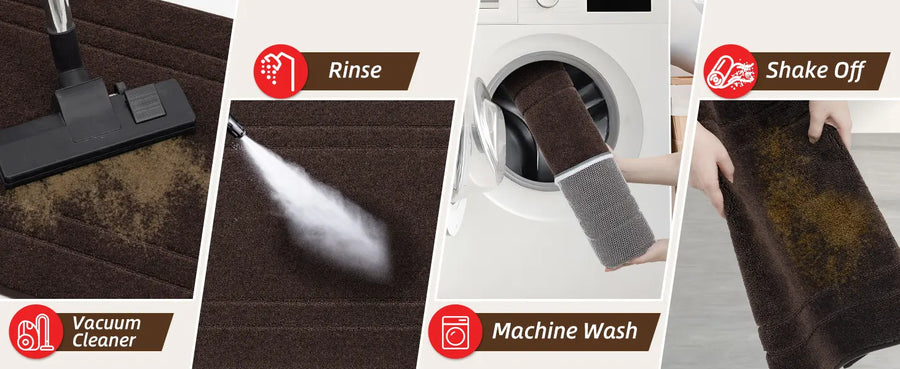
For non-washable mats or spot cleaning, use a carpet cleaner with a hose attachment, focusing on both the accident spot and surrounding areas.
Step 4: Dry Completely
Moisture is the enemy of fresh-smelling mats. After washing, air dry the mat completely — never put it in the dryer unless the manufacturer explicitly allows it. If the mat has rubber backing, air drying is essential to prevent damage. You can speed up drying by placing it in a well-ventilated area or using a fan. A mat that's even slightly damp will trap smells and may grow mildew.
Prevention Tips for Pet Mats
The best way to handle urine smell is preventing it in the first place:
- Place washable pet mats in high-risk areas like entryways and near pet beds
- Clean up accidents immediately — the faster you blot, the less smell develops
- Consider using waterproof protectors under washable mats for added protection
- Rotate multiple mats so you always have a clean backup
FAQ About Pet Mat Odor Removal
Can I use vinegar instead of an enzymatic cleaner?
Vinegar helps neutralize odors but doesn't break down uric acid crystals. For best results, use an enzymatic cleaner first, then vinegar as a secondary treatment.
How often should I wash my pet mat?
Wash your pet mat weekly if your pet uses it daily, or immediately after any accident. Regular washing prevents odor buildup before it starts.
Why does my mat still smell after washing?
The most common reason is incomplete drying. Urine smells return with moisture, so ensure your mat is completely dry before putting it back in place. If the smell persists, repeat the enzymatic cleaning process.
If your pet mat has absorbed multiple accidents over time, you may need to repeat this routine several times to remove all traces of odor. The key is patience — breaking down embedded uric acid crystals takes time, but following these steps will restore your mat to fresh condition.
Made for Pets, Loved by People
Transform your space with JSEI non-slip, washable dirt trapper door mats. Designed for peace of mind, crafted for busy households.